Did Michael Jackson Bleach His Skin Color or Have Vitiligo? What We Know ?
Michael Jackson had vitiligo, a skin condition that causes patches of skin to lose their color, and it had a pretty huge impact on his life. He went on Oprah Winfrey back in 1993 and talked openly about the condition, saying it had destroyed the color in his skin. Years later, when he passed away in 2009 an autopsy confirmed he had vitiligo, which brings us back to what he had been saying all those years before.
The media tended to label him as someone who had “bleached” their skin to change their appearance or for some other twisted reason, but that term completely misses the mark. Vitiligo is a far more complicated condition than that. It can spread and get worse over time – you can try to cover it up with makeup, or even use special treatments if it gets really bad. And the fact of the matter is the medical record doesn’t support the claim that Michael Jackson tried to change his color for superficial reasons.
Michael Jackson Bleach His Skin Color
- Before anyone else started yelling about it, Michael Jackson himself came out in 1993 and talked openly about having a skin problem that messed with his skin color.
- In 2009 it was confirmed by his autopsy that he had vitiligo.
- Vitiligo is a condition that causes patches of skin to lose their color, and they can keep getting bigger over time.
- All that makeup and careful lighting in public really helped to even out his skin tone.
- For some people with really widespread vitiligo, medical professionals can use a treatment to remove the pigment from the skin altogether.
- The “skin bleaching” thing simplified an actual medical condition and turned it into a personal judgment call.
The Evidence for Dummies
The key bit of evidence here comes from three places: what Michael Jackson himself said, what the autopsy said, and some actual medical experts who can explain the condition.
In his 1993 chat with Oprah, Michael talked about having a skin problem that had pretty much killed his skin colour. Oprah herself later said that was one of the big revelations he made on the show.
Later on, in 2009, an autopsy was done after his death – and it turned up evidence of vitiligo and the kind of skin damage that comes with it. The University of Massachusetts Vitiligo Clinic has since said that an examination under a microscope would have shown a complete lack of pigment and fewer melanocytes (the cells that produce skin colour).
Doctors at the Mayo Clinic also have some insight – they say that vitiligo is basically a disease that causes skin to lose its colour in patches, which can just keep getting bigger & bigger as time goes on.
Did Michael Jackson Bleach His Skin Colour?
The short answer is no, the truth is a bit more nuanced: Michael Jackson had vitiligo and was getting treatment for it, but calling him a “bleach addict” is misleading.
To say Michael Jackson simply “bleached his skin color” is a gross oversimplification and gives readers the wrong idea. When we talk about vitiligo care, we use the medical term depigmentation. That means taking away or reducing the remaining pigment to balance out the skin when huge areas already have lost colour.
The American Academy of Dermatology says that in treating vitiligo, we’re trying to either restore lost skin colour, stop the patches from getting any bigger, or prevent new ones from showing up. And according to Mayo Clinic, treatments can restore skin colour or even out skin tone, but the results arent always great and some treatments have nasty side effects.
We know that UMass’s vitiligo centre found tubes of Benoquin and other skin-lightening meds among Jackson’s meds after he died, and described Benoquin as a legit treatment for vitiligo – and that changes everything. Now it’s not some shallow attempt on Jackson’s part to “turn white”. Its a complicated situation tied up with a real diagnosed skin condition that over time had a big impact on how his skin looked.
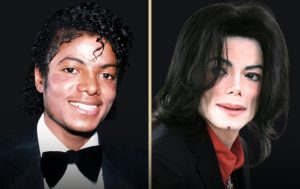
Did Michael Jackson Have Vitiligo?
Yep. Michael Jackson had vitiligo.
Vitiligo happens when the skin loses its pigment because the cells that produce melanin – melanocytes – either stop working or die off. The NHS says that in vitiligo, the skin just doesn’t have enough working melanocytes.
Vitiligo is way more visible on darker skin because the contrast is way stronger. A small patch can really stick out. Larger patches can totally change how someone looks in photos, on TV and in the bright lights of the public eye – especially when you’re living under the constant glare of the camera like Jackson was.
And let me set the record straight: vitiligo is not contagious, it ain’t because of poor hygiene and it doesn’t say anything about a person’s racial identity or self worth.
What His Autopsy Actually Said
Jackson’s autopsy confirmed he had vitiligo – and that finding is really important because it put an end to all the public debate.
The UMass Vitiligo Clinic and Research Centre summed all this up by saying the autopsy report showed patches of light and dark pigmented areas, noted vitiligo in his medical history, and even found that melanocytes were way reduced under the microscope.
It didnt prove every single tabloid story true and it didnt explain every single cosmetic choice he made or every surgery or makeup look or every photo from his career. All it did was state that vitiligo was a real fact.
And that changes everything. The most solid evidence points to a real skin disease first, not some wild rumour first.
Why His Skin Looked Lighter Over Time
Jackson’s skin started looking lighter due to a combination of things.
Vitiligo was definitely a factor – and according to the Mayo Clinic, those areas of lost color just keep getting bigger with time. On darker skin that spread creates a super harsh contrast between the bit that’s still got pigment and the bits that’ve lost it all. And as more and more skin loses its pigment, it can start to look a lot lighter as a whole.
Makeup also played a part. Jackson said to me that makeup really helped even out the appearance of his skin. As a performer, uneven skin tone is going to stick out a mile under stage lights, flash photography, and close up video shots. When you’re talking about music videos, award shows & magazine shoots, heavy makeup can make the skin look a heck of a lot smoother and more even.
Lighting also changed the way people saw him too. Bright stage lights can just wash out any skin tone & flash photography can make pale makeup look even paler. And of course magazine editing and video production – that’s been going on for ages before we even had social media filters.
That’s why pictures from the same time all look different to you. One looks like it’s got heaps of contrast, another looks like it’s just one big pale mess. What the public saw was the finished product, not what he looked like underneath all that.
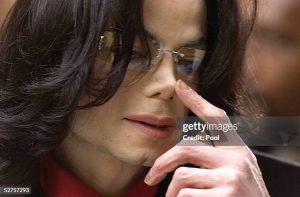
SANTA MARIA, CA – MAY 4: Singer Michael Jackson gestures as he arrives at the Santa Barbara County Courthouse for his child molestation trial May 4, 2005 in Santa Maria, California. Jackson is charged in a 10-count indictment with molesting a boy, plying him with liquor and conspiring to commit child abduction, false imprisonment and extortion. (Photo by Aaron Lambert-Pool/Getty Images)
Bleaching vs Depigmentation: Why the Word Matters
The term ‘bleaching’ became popular because it’s short, dramatic, and it’s easy to say. But it also carries a bit of a harsh judgment with it. When we say ‘bleaching’ in regards to Michael Jackson, it usually implies that he was rejecting his race or that he changed his skin because of vanity.
Depigmentation is a different story entirely. In a medical setting, depigmentation is when you’ve got widespread vitiligo and the remaining darker bits are looking super stark against the light bits. The goal here is to make the skin tone look a bit more even out, not to create some new racial identity.
Mayo Clinic explains the treatment options that can restore some of the lost colour or help even out the skin tone – but they note that the treatment choice all depends on how much of the skin is involved, how fast the disease is progressing, and how it’s all affecting the person’s life.
That is a pretty big context. Michael Jackson’s lighter appearance didn’t just happen in a vacuum – it came after he had a documented pigment disorder, public pressure, makeup use and treatment choices that were all tied to the visible changes to his skin.
Was Lupus Involved Too?
Lupus gets brought up a lot in public discussions of Michael Jackson’s health – along with vitiligo. But the problem is, lupus can affect the skin but it’s not the one that’s directly causing his skin to lose its pigment – that’s vitiligo’s job.
The article really shouldn’t turn lupus into the main reason for his lighter skin – because the evidence just isn’t there, and the autopsy and other medical stuff all point to the pigment loss and melanocytes being reduced, which is a pretty clear sign of vitiligo.
Why the Rumor Spreads and Takes Hold:
The rumor about Michael Jackson’s skin spread because to the world he went from one appearance to another right before everyone’s eyes. He wasn’t a private person struggling with a private condition – he was a highly photographed performer, one of the most famous people on earth.
People in the 1980s and 90s knew nothing about vitiligo and they only saw his skin tone changing, then the tabloids give them a simple story: “oh, he bleached his skin”. That was an easy story to remember, but its left out the actual medical facts.
Now add to that the racial element in the US. Here was a Black artist who’s appearance changed while he’s becoming one of the biggest stars in the world. Some people misread his skin change as some kind of racial statement. Others thought the criticism was just cruel because it totally ignored that he had a real medical condition.
The media reduced a serious medical issue to some kind of public judgment, and that’s probably why the rumor lasted so long
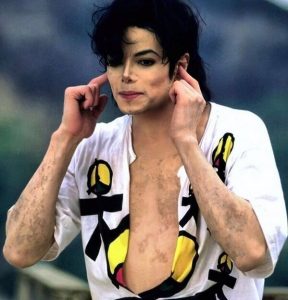
Skin Color, Race and Public Opinion
What really happened with Michael Jackson is not just about skin or dermatology – it’s part of a bigger public conversation about race, fame, beauty and how people are quick to judge peoples appearance.
His changing skin tone let some folks claim he was trying to distance himself from being Black. Even though he said he had a skin condition and later the medical evidence backed that up, this still became part of the public narrative.
To give someone a fair shake you don’t have to pretend everything about their public image was simple. Jackson did change his appearance in many ways over his career, but still, the skin-color issue has a medical foundation that just got overlooked.
The thing is – a medical condition doesn’t prove anything about some one’s racial identity, values or self-worth.
A Timeline of Michael Jackson’s Skin Change
The 1970s
People remember Michael Jackson looking darker during the Jackson 5 days and his early solo years. That was the image he had during Motown-era performances and early TV appearances.
Early 80s
As Jackson’s solo fame started to grow people started paying a lot more attention to the changes in his appearance. Also, he became this global pop star with albums, videos and major TV exposure.
Mid-to-Late 80s
His skin looked lighter in public events, videos and photos. The bleaching story started getting more and more talked about at this time.
1993
Jackson told Oprah that he had a skin disorder that’s destroyed the pigmentation in his skin. Its the first time he really spoke about the skin color rumor publicly.
2009
After he passed away, the autopsy showed he had vitiligo. Later on, UMass found he had reduced melanocytes, which is what they’d expect to see.
Why Photographs of Michael Jackson can Look Different
Different photos of Jackson do not all have him looking the same. And that’s not even a challenge to the idea that he had vitiligo – it just goes to show how all those pesky things we take for granted can mess with a photo: like the camera, makeup, lighting, and all that fancy editing.
You’ll see it in concert photos – where the bright lights can make your skin look washed out or in flash photos where your makeup just gets all highlighted. Magazine covers – they’ll smooth out your face and brighten everything up. And then there are the candid shots where your skin will just look more, well, uneven.
Now vitiligo itself can create a lot of unevenness – some patches lose their pigment, other patches keep on trucking. When you’ve got makeup covering all that contrast, it’s like your skin just looks pale. But without makeup, the contrast between patches can look a lot more obvious.
What Vitiligo Does Not Mean
Vitiligo has got nothing to do with someone wanting to change their race. Nothing to do with someone being ashamed of whom they are and it certainly doesn’t mean someone did something to cause it.
The truth is, vitiligo is just a skin condition that makes it hard for pigment to stick around. For people with darker skin, that just makes things a lot more noticeable – and with that comes all the extra questions and criticism from the public. And when you’re a famous performer like Jackson, all that scrutiny just gets amped up to the max.
And that matters, because back when we were all making assumptions about Jackson, we took this legit health condition and turned it into some kind of moral failing. But the proper response would have been: Jackson had vitiligo, and his appearance in public was just one piece of that puzzle – along with makeup, treatment, and all the other things that make you look a certain way.
What Dermatologists Say About Vitiligo Treatment Now
These days, the focus when it comes to treating vitiligo is all about managing the effects, and helping the patient figure out what to do next – especially when it comes down to just how much of their skin is affected. What the American Academy of Dermatology says is that the goal is to get that pigment back, so to speak, and also stop the patches from spreading, and keep new ones from popping up.
The Mayo Clinic has a similar take – saying that medications and those light-based therapies can really help bring back the lost skin color or just even out your tone altogether – though it does note that the results are pretty hit-or-miss. And they also say that something as simple as makeup – or even a self-tanning product – can make a big difference in how your skin looks, at least to the outside world.
To be sure, back when all this was going on, during Jackson’s heyday in the tabloids, most people didn’t get it – but thanks to all the public figures and medical groups talking about it more openly these days… well, it’s getting a lot easier to set the record straight.
Why This Question Keeps On Bubbling Up in 2026
Michael Jackson’s public image was thrust back into the spotlight in 2026 thanks to the biopic Michael. The film has been scheduled to hit theaters on April 24th, 2026 according to the official movie site. Its release has neatly coincided with a renewed interest in MJ’s appearance – but its not just the film that’s driving it.
Younger folks are watching those old short-form videos, and they’re coming across clips from different eras, confronting the change in his skin tone. The thing is, a short clip can barely scratch the surface. It never goes into the full story of vitiligo, the 1993 Oprah interview, the autopsy, or the impact of makeup and de-pigmentation .
That’s why the question stays ranked. People aren’t just searching for gossip. They’re really trying to get to the bottom of what actually happened.
The Lowdown on Some Common Michael Jackson Skin Myths
Myth: Michael Jackson just made up having vitiligo
Reality: The autopsy reports had it, and the medical folks at U Mass had some pretty clear findings that matched the condition.
Myth: Vitiligo only causes a few tiny spots
Reality: It can spread and the patches of color loss get bigger over time.
Myth: Using makeup means Michael was faking the condition
Reality: Makeup is a totally normal way to manage skin differences. In MJ’s case, makeup helped him look more even in public.
Myth: Its all just about beauty choices
Reality: There’s a whole lot more to it than that. We’re talking medical condition, public misunderstanding, racism, famous people getting ripped to shreds in the tabloids…
Myth: The autopsy proved every rumor was true
Reality: The autopsy did confirm he had vitiligo. It didnt prove the harsh tabloid claim that he bleached his skin out because he was ashamed of his race.
Got The Final Answer – Did Michael Jackson Bleach His Skin or Have Vitiligo?
Michael Jackson had vitiligo. He talked about it back in 1993 – his skin condition that was wiping out his pigmentation – and his autopsy later confirmed he had the condition. Medical experts from U Mass also described how his melanocytes (those skin cells that give you your color) had been reduced – right in line with the characteristics of vitiligo.
As time went on, his skin did look lighter because the vitiligo was causing his pigmentation to disappear. And it wasn’t just the vitiligo that gave him that look either – choices like makeup and skin treatments played a role too. People started calling it bleaching because it was a simple and attention-grabbing way to put it, but its not even close to accurate.
Frequently Asked Questions
Did Michael Jackson really have vitiligo?
Yes – and he said as much way back in 1993 when he first talked about having a skin disorder that messed with his pigmentation, something that was later confirmed by his post mortem.
Did Michael Jackson bleach his skin ?
To give you a better answer – he did have vitiligo, and at some point it appears he was using treatments related to that condition. When treating vitiligo you can use depigmentation to try to even out skin tone if the pigment loss is pretty widespread. Without putting the full medical context into the story though, people tend to just call it “bleaching”.
Why did Michael Jackson look so pale?
Because of the vitiligo – that’s the condition that’s causing the pigment loss on his skin. And let’s be frank, he also used a lot of makeup, lights and skin-evening treatments to try to even things out when he was in public – so it looked like he had a much more even complexion.
Can vitiligo turn dark skin super pale?
Absolutely. The thing is, vitiligo can just go and remove pigment from big areas of skin – and if you’re starting with darker skin to begin with, the contrast ends up being pretty extreme, so it looks a whole lot more dramatic.
Did Michael Jackson use any makeup?
He did – and he told people that he did it to try and even out the appearance of his skin because of the uneven pigmentation that the condition was causing.
Is vitiligo contagious?
No way. This is a skin condition that’s not contagious at all – it’s all about the pigment loss in the skin.
Why did the whole skin bleaching thing just stick around for so long?
Partly because his appearance did change quite a bit in public, partly because the tabloids just picked up on a simple story and partly because a lot of people just didn’t understand what vitiligo was at the time.